
An investigation of the feminine in the horror genre, focusing on the alternative depictions of women presented in Neil Marshall’s ‘The Descent’.
The representation of women in horror correlates directly with the way in which the feminine is constructed by society at the time in which the film is made. Representations of women became most significant in the 1950s, in which horror became more established as a staple genre. Within the context of the 1950’s, the horror genre acted as an allegory to react to different events. Stereotypes that emerged from this period clearly sexualised women, offering them up to audiences as passive victims, as ‘women in peril’ or ironically as the ‘monstrous feminine’. The stereotypes presented in horror are driven by the ideological context in which films are made, as such we can trace exploited depictions of women that are objectified. Key texts that these representations are shown in include the Hammer House of Horror’s ‘Dracula’ (1958) and Alfred Hitchcock’s ‘Psycho’ (1960). Following this, a second wave of feminism became more distinguished. During the American new-wave era new representations of women started to emerge, such as the ‘final girl’, presenting the female as more of a heroine than a victim. One recent contemporary horror that has whole heartedly redefined the role women in the horror genre is Neil Marshall’s ‘The Descent’ (2005). Here Marshall addresses both of these modern representations, through the depiction of empowered women. Though these modern representations remain in contemporary horror, many of the old stereotypes re-emerge in 20th century modern horror.
Early gothic literature played a huge part in influencing the ideologies of horror films as the novels (such as ‘Frankenstein’ and ‘Dracula’) that inspired many film adaptations became readily packaged with a patriarchal bias. Naturally, the male protagonists are portrayed as heroes, and any concern or threat to male authority and masculine transgression is considered villainous. In Dracula, women fall victim to the Count due to his alluring charms and they are then killed. In Frankenstein, women fall victim to the men in two ways, firstly the literal killing of them at the hands of the male creature, yet this wouldn't have occurred if not for his creator, Victor, who’s excessive passion could not prevent him for creating the monster. Both of these ultimately present the male dominance of men in society at the time.
This inspired companies to adapt these gothic novels, and in the process the female characters were exaggerated to fit with society’s perceptions of women, a significant production company being ‘The Hammer house of horror’. Themes that became known from these films were the repetitive plots, including a horrific monster, such as ‘The Curse of Frankenstein’ which portrayed the image of a gruesome and mangled creature. These representations became vital to these plots, which often exaggerated the stereotypes of the female characters; such stereotypes including victimisation of the female. The film ‘Dracula’ (1958), acts as a clear example, depicting the passive young females who become victim to the evil ‘Dracula’ (Christopher Lee). Though it can be considered that Dracula’s dominant personality can be representative of male dominance in society, it is more likely that the audience will identify with the male hero, Van Helsing (Peter Cushing). He is intelligent, handsome and well equipped with the capabilities of destroying the enemy. He outsmarts Dracula and kills him, also saving the woman from Dracula’s curse; now objectifying her as a reward for the male who saved her. This objectification correlates to how women were perceived in society at the time, ‘typically’ having to meet certain expectations, like being a domestic housewife, who are commanded by men. Therefore women are targeted in horror as the ‘damsel in distress’, portraying women as weak and passive, not having any control or power to prevent their doom. This passive portrayal of women can link to the absence of female directors and writers in, not only the horror genre, but the majority of the film society. This was allowing men to have the control and authority in these films. Another representation the ‘Hammer’ films are notoriously infamous for is the sexualisation of women. More often than not, these representations (Such as ‘The Countess Dracula’) have been created on purpose to call out to the male audiences. This is supported by the feminist critic Laura Mulvey, who explains that the “Male gaze” is used for presenting women in a sexualised way, as “visual pleasure” for men and are “made to seem like sexual objects through voyeurism”, which males were able to enjoy from a ‘hidden’ vantage point as a member of the audience. This allegory has been used to convey the ‘norm’ of the ideology in society, suggesting that men of that time period had a particular ‘misogynist’ view. Mulvey also explains that “The female protagonist often fails to look, to return the gaze of the male who desires her”, which implies that there was an absence female directors within the film industry at this time that would promote female equality in film. A literal representation of this is can be seen in Michael Powell’s ‘Peeping Tom’, in which shows a man who murders women and films their dying moments, considering it ‘art’. Linking to the stereotype of ‘women in peril’, this film conveys the idea of the female voice becoming silent, unable to speak out against the men who are controlling them.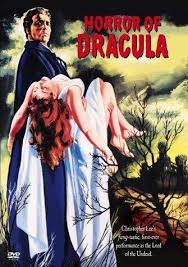

Alfred Hitchcock’s Psycho portrays many of the degenerative stereotypes of women, most significantly, ‘women in peril’. The lead actress Janet Lee portrays the character Marion, who is killed off within the first act, at the hands of a man.
This suggests that women who were not conforming to the expected stereotypes were punished on film by men. At the time, Psycho used many modern themes such as “nudity, overt voyeurism and an unmarried couple in bed together”, which can show that Marion is punished for her ‘sexual desires’, and her ‘crime’ of attempting to escape society and become independent, without relying on a man. Psycho also presents an idea of how women ‘should’ be. This can be shown during the scene in which Anthony Perkins's character, Norman Bates, implies that Marion “eats like a bird”, immediately presenting the parallel between women and birds. Norman goes on to explain that Birds “are passive”, which could present Hitchcock's own view on women, conforming to the common ideology of the time; that women should be submissive and controlled.
Hitchcock also goes onto convey an early stereotype of the ‘monstrous feminine’ which has been a staple of the horror genre for many years, and continues to be presented in modern day films. The term was coined by critic Barbara Creed, who challenges “the dominant, patriarchal view, which frequently puts the woman in the position of victim”, instead she depicts the idea that women are ‘monstrous’ in horror due to their maternal connotations. This is shown in Psycho as “the primary female stars (who) are killed off early by knife-wielding murderers who appear, to both their victims and the audience, to be female”, implying that the ideology behind these representations that women are a threat/ something to be feared. Norman’s actions are a result of been “dominated by his demanding and clinging mother whom he eventually killed”. Though this evokes the idea that ‘mother’ is a victim of a man, she is also portrayed as the ‘monstrous feminine’, through her murderous nature, therefore “asking us to believe that the woman is both victim and monster”. Theorist Julia Kristeva supports this idea through her theory of “Abjection” in horror, meaning to degrade or unsettle the ‘norm’. Through “disturb[ing] identity” , Psycho leads audiences into believing that women are the source of corruption and evil, particularly portraying the allegory of men’s fear of their mothers. Norman is overcome by his mother’s controlling personality hence him being consumed by her. Many of these ‘monstrous feminine’ representations are present in many modern horror films.
A significant example is the movie ‘Carrie’. Carrie is a symbol of innocence, one of which male and female audiences can relate to, as they identify with the familiar themes of bullying and puberty. The critic Carol J Clover expresses that Carrie’s transformation is used as a method for “women (to) find their own channels of power”, which acts as a form of feminism, resulting in “what men fear about women and women’s sexuaity” as it is something obscure and unfamiliar to them. In support, theorist Shelley Stamp Lindsay offers the argument that “the film presents female sexuality as monstrous”. There are obvious ‘voyeuristic’ connotations in the opening of ‘Carrie’, during which she takes a shower, yet this changes into a more ‘monstrous’ and wicked scene through the way the other girls treat her, which may be representational of this fear. This can be applied to both the original ‘Carrie’ (1978) and the remake (2013) which highly indicates that these views on women are still applicable to modern society, showing that there has been no change in societies ideologies. Similarly, the contemporary film ‘Jennifer’s body’ (2009), which depicts an adolescent women who is transformed into a succubus, at the fault of men. She therefore becomes ‘monstrous’ as punishment for her ‘hypersexual’ sins, then uses her power to gain revenge on men, which can correlate to the idea that society perceives this type of ‘hypersexual’ female as corrupt, and should not be allowed to live the way they do.

‘The Descent’, however, is one of the first films to consciously reverse the ‘monstrous feminine’ role, as there is more of a focus on the ‘male’ monster. The ‘male’ creatures are representative of the oppressive males in our own society, who ‘attack’ females to assert their power, by removing their authority. However, the women are able to overcome these threats, equally matching their dangerous qualities. This is revealed in the scene where the group of women defend themselves against the vicious creatures that attack them. Marshall effectively uses many claustrophobic shots, often framing and trapping characters between the solid rock walls. This is then contrasted with the wide long shots which remind the audiences of the vast space within the cave. The limited lighting in the scene strongly presents the horror genre; all natural daylight is removed, therefore pushing the characters and audiences out of their comfort zones and creating a sense of fear within the dark. The limited ambient light provided from the character’s helmets engages the audience’s attention as they are seeing only what the characters are able to see. This vulnerability of the women is removed when the mise en scene of Juno’s actions become violent towards the creatures(59.00). She defends herself with a small weapon, is able to overcome her fear, and is fuelled with adrenaline, acting more upon her instincts for survival. She uses more obscene profanities towards the creature which emphasises the move away from the ‘innocent’ and weak female stereotype. Quick cuts add more of a fast pace to the conflict, and as they struggle, Juno proves to be an equal match to the force of the creature, eventually violently stabbing it to death.
Director Neil Marshall uses a significant portrayal of women, prior to that in ‘The Descent’. Marshall directed ‘Dog Soldiers’ (2002), which shows a prominent interest in the horror genre and strong female depictions. The character Meghan is initially portrayed as a strong and powerful ‘ladette’ woman. Though she is revealed as an antagonist at the end, she still doesn’t rely on male assistance, which is similar to the females in ‘The Descent’. In doing this, Marshall presents an interest in the portrayal of women in horror, in which he uses a contemporary approach, which makes the genre more modern. Though, in comparison, ‘Dog Soldiers’ uses the strong female depiction as a plot device; it is revealed that Meghan is associated with the enemy, and she transforms into a werewolf, acting as a literal representation of the ‘monstrous feminine’ stereotype.
With the movement of American New wave era of horror, many of these typical representations became challenged. As suggested by Anthony Giddons, the 1970s was a time in which people were breaking away from society and becoming individuals, particularly women. Therefore many horror directors took inspiration from these movements, and produced horror films as reactions to these changes. This period, beginning in the 1970s, sought females becoming more centralised to the narrative, often surviving and becoming the heroine, as opposed to being victimised. As the new ‘Slasher’ genre was emerging, they were becoming “preoccupied with the ‘horrors at home’ and slowly (beginning) to reposition the female’. This started to depict women who were no longer weak and unable to defend themselves, showing more powerful characters who were capable of actively seeking the threat and destroying it. This was emerging due to the growing second wave of feminism, a movement that saw women rejecting the roles they are typecast by society, (such as domesticated housewives). This movement “focused on passing the Equal Rights Amendment to the constitution guaranteeing social equality regardless of sex”.
This established the ‘final girl’ role, a stereotype which depicts a young woman who is not corrupted through the means of which her friends are (through sex, drugs, alcohol), and instead gains the power to survive the threat due to her intelligence and will.
The ‘final girl’ term was coined by Carol J Clover, and she suggests that the female characters are presented as “Initially weak” but then gradually emerge as “the one with who is able to overcome the threat”. This suggests that women were gaining the equality they had set out for through feminism, and their portrayals of characters were becoming equal to their male peers. Through removing their victimization, these representations of women were allowing both men and women to identify with the lead, for example Clover “believes that the male viewer will eventually see themselves as the ‘final girl’ (and root) for her survival”.This led to fact that women started watching horror films, rather than the taboo of them only being interested in ‘Chick Flicks’. This lead to more of these types of films to be produced, a significant one being John Carpenter’s ‘Halloween’ which brought about another eight sequels. As the audiences was increasing, so was the revenue and gaps in the market were emerging for these types of film. The ‘final girl’ often faces a male masked murderer, showing that women could now defeat these antagonists, provoking their own strengths and removing the oppression by the males in society.

There is a strong significance behind the final girl (Sarah) in ‘The Descent’. Though the plot leads the audience into believing she will be killed, there is still a suggestion that she will succeed and escape. The protagonist Sarah goes on a journey of self discovery throughout the film, escaping not only the physical threat, but also the mental demons she has previously experienced. Certain enigma codes (such as the non-diegetic child’s laughter and the flashback to the birthday candles) that have been haunting Sarah enables her to defeat the physical threat of the creatures. As Sarah dreams of her child, she uses this memory as more of a strength and an incentive to go on and survive, where the other group members had failed and were killed off. The match cut from the birthday candles to the torch (1.30.38) is strong symbolism of the ‘final girl’ carrying the light. As this is the only source of light in the cave, it can be deduced that this is a metaphor for feminism and its stride for equality in society.
The film also outlines all the different stereotypes of women, none of them being negative portrayals. The character Juno is presented as having a large ego, making her believe she is capable of leading the group into an undiscovered cave. Another presentation is the caring/mothering (Sarah) who is initially portrayed as weak due to her bereavement, but then is able to overcome this. The scene where they have a party the day before the exploration, they are all presented similar to a realistic portrayal of a woman, whom the audience are more likely to identify with, as demonstrated through the mise en scene showing them drinking, smoking, and using profanities when talking. This conveys the idea that “the character seems to be the living embodiment of stereotypical conservative attitudes of what women "should be", confining them to the certain expectations of society. Through contrasting with the early stereotypes of women, who were innocent and almost ‘angelic’, ‘The Descent’ delivers a pronounced move away from the typical portrayals of women in horror.
‘The Descent’ also uses depictions of ‘women in peril’ for effect, such as the tense scene in which a character attempts to climb over a large precipice within the cave, which she has a chance of falling to her doom (38.30). The non-diegetic music maintains a tense atmosphere, which is even more effective with the use of the woman’s diegetic panicked breathing. Close ups are used to capture her pain, and are brought into perspective when the camera moves to a longshot to remind the audience of the large precipice in the cave, linking to the theme of ‘urbanoia’. The limited lighting plays on the audience’s imaginations; the fear of what could be hidden in the shadows. The only light presented is from the red light of the groups helmets, which has strong connotations of evil and danger. This presents a more modern ‘ladette’ representation of women, portraying them with equal power to men, showing many of the women are able to overcome the threat and are able to define their strengths.


Alternatively, to counteract the idea that females are rejecting their gender roles in modern society, ‘Drag me to Hell’ (2009) reverts back to the typical stereotypes of women in horror. Sam Raimi’s contemporary horror film portrays the lead character (Christine) as initially weak, and is constantly consumed by the ‘woman in peril’ stereotype’, despite it’s correlation to modern society. Men take advantage and exploit Christine in her workplace, showing that the film is relying on a more traditional portrayal of the female lead. It is also notable that it is the fault of a man that Christine has to face the evil threat, leaving her to literally be ‘Dragged to hell’. The audience are lead to believe that Christine has overcome the threat and become a strong, courageous woman, yet she is dragged to hell in the very last minute of the film. Though this conforms to the typical plot twist and shock of the horror genre, there is also a significance about the death of Christine as the ‘final girl’. This perhaps conveys the allegory that women are not capable of dealing with a threat independently, or are not allowed to without the help of a superior male, delivering the symbolism that her death is the ‘silencing’ of the strong women.
Therefore it can be proven, that the depictions of women in horror correlates with the ideology that society is presenting at that time. Undoubtedly, directors of the genre (prior to Neil Marshall) conformed to the typical representations (such as the monstrous feminine and the final girl) to act as an allegory for their roles in society. These directors also used representation as a form of reaction to different events in society, which includes positive and negative views towards feminism and female empowerment. Though it can be considered that weak representations of women are still prominent in the film industry (due to the success of the conventional horror formulas), ‘The Descent’s significant movement away from this suggests a positive outcome for the female representation in horror. ‘The Descent’ illustrates a distinct move away from the archetypal gender stereotypes, through depicting the women as similar to those in modern society and equal to a males representation.
Bibliography
The Descent. Dir. Neil Marshall. Celador Films, 2006.
Drag Me to Hell. Dir. Sam Raimi. Roadshow, 2009.
Psycho. Dir. Alfred Hitchcock. Shamley Productions, 1960.
Jennifer's Body. Dir. Karyn Kusama. Twentieth Century Fox, 2009.
Carrie. Dir. Brian De Palma. MGM/UA, 1976.
Carrie. Dir. Kimberly Peirce. MGM, 2013
Ambonsah, Priscilla. "The Theory of Male Gaze." The Theory of Male Gaze. Slideshare, 9 Oct. 2013. Web. 27 Nov. 2014. <http://www.slideshare.net/priscillababy/the-theory-of-male-gaze>
Grant, Barry Keith. The Dread of Difference: Gender and the Horror Film (Texas Film and Media Studies Series). N.p.: U of Texas., 12/1/1996. Print.
Murphy, Cath. "The Trouble With Alfred Hitchcock - Sound On Sight." Sound On Sight, 2012. Web. 30 Nov. 2014. <http://www.soundonsight.org/the-trouble-with-alfred/>.
"The Monstrous Feminine (Barbara Creed 1993)." Studies in Fiction. Studies in Fiction, 5 Nov. 2011. Web. 27 Nov. 2014. <http://studiesinfiction.wordpress.com/2011/11/05/55/>.
Perspectives:, European, and A Series Of The Columbia University Press. "Power of Horror- An Essay on Abjection." (1982): n. pag. COLUMBIA UNIVERSITY PRESS. EUROPEAN PERSPECTIVES: A Series of the Columbia University Press. Web. 27 Nov. 2014. <http://seas3.elte.hu/coursematerial/RuttkayVeronika/Kristeva_-_powers_of_horror.pdf>.
Clover, Carol J. Men Women and Chainsaws: Gender in the Modern Horror Film. London: BFI, 1992. Print.
Rose, James. "Power and Politics Issue." MediaMagazine Dec. 2011: n. pag. Web. 27 Nov. 2014.
Rampton, Martha. "The Three Waves of Feminism." Pacific University of Oregon, 23 Oct. 2013. Web. 26 Nov. 2014. <http://www.pacificu.edu/about-us/news-events/three-waves-feminism>.
"The Final Girl." SciFi Now 2012
Images and Stills:
"Horror of Dracula." IMDb. IMDb.com, n.d. Web. 04 Dec. 2014.
McCracken, Colin. "Dracula (AKA Horror of Dracula) [Blu-Ray Review]."Diabolique Magazine. N.p., 22 Feb. 2013. Web. 04 Dec. 2014.
The Descent. Dir. Neil Marshall. Perf. Alex Reid. Celador Films, 2006.
Ponce, Febe. "Alfred Hitchcock: Why Is Norman Bates so Psycho?" Deviance and Social Order. N.p., 20 Sept. 2012. Web. 04 Dec. 2014.
Word count: 3050